Regulator Freezing Up? Fix Flow Dropouts (CGA-580) Before You Burn More Consumables
When a shielding gas regulator starts frosting up or the flow drops out mid-weld, the problem looks like a welding issue — porosity, spatter spikes, and an arc that suddenly feels unstable. The real cost is rework: you grind out defects, swap tips, and keep adjusting settings when the root cause is gas delivery.
This guide is a fitment-first checklist focused on the most common causes of flow dropouts and the practical fix: confirm CGA inlet fitment, leak-check the system, and restore a repeatable flow baseline.
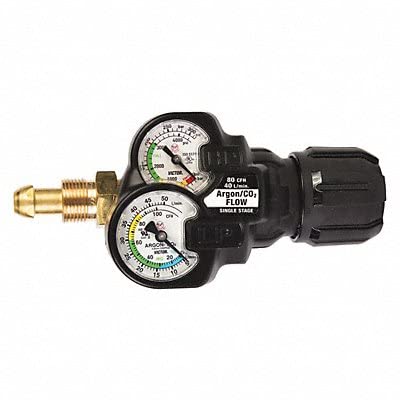
Featured Product Quick Take
- Name: Victor 0781-3641 ESS32-50CFH-580 EDGE 2.0 Flow Gauge Regulator
- SKU: 0781-3641
- Price: Unknown (Verify)
- What it fixes: flow dropouts and inconsistent shielding gas delivery that often show up as porosity, arc instability, or a station that suddenly welds worse after running fine earlier in the day.
- Why it matters: when flow becomes inconsistent, you waste time chasing voltage/WFS and swapping consumables. Restoring stable gas delivery is the fastest way to get back to repeatable weld quality.
- •Brand: Victor (product page)
- •SKU: 0781-3641 (product page)
- •Model string: ESS32-50CFH-580 (product title)
- •Flow range: 50 CFH (product title)
- •CGA inlet: 580 (product title)
- •Outlet thread/seat: Unknown (Verify)
- •Included hose: Unknown (Verify)
Fitment note: confirm your cylinder inlet is CGA-580 and verify your hose end fitting/outlet seat type before ordering. Do not force mismatched CGA fittings.
What This Fix Solves
- •Shielding gas that starts fine, then drops or becomes inconsistent mid-shift
- •Porosity that appears after longer weld cycles (not on the first bead)
- •Arc instability that comes and goes when nothing else changed
- •Frosting/icing on the regulator body during high draw (common in colder shops)
- •Repeat rework because you keep adjusting settings instead of fixing gas delivery
Root Cause Breakdown
- High sustained flow demand: Long beads, higher wire speeds, or multiple stations pulling from the same supply increase draw. Under sustained demand, weak or mismatched regulation can show up as flow dropouts.
- Small leaks that become big problems: A slow leak at the cylinder/regulator/hose connection can reduce effective delivery and create inconsistent coverage. It also wastes gas and makes troubleshooting confusing.
- Wrong inlet (CGA mismatch) or forced threads: A CGA mismatch can appear to tighten but not seal correctly. That can cause leaks and unstable delivery. CGA-580 is common for argon/helium/nitrogen family cylinders; verify your cylinder valve.
- Turbulence from excessive flow: Too much flow can create turbulence at the nozzle and actually pull air into the shielding stream. The symptom looks like low flow, but the cause is too much flow.
- Nozzle/diffuser restriction: Spatter buildup inside a MIG nozzle restricts gas coverage and can mimic a regulator issue. Confirm the torch front end is clean before you replace gas equipment.
The Fix (Actionable Steps)
- Confirm the cylinder gas and inlet type (CGA). For this product, the title indicates CGA-580. Verify your cylinder valve matches.
- Leak-check every connection (cylinder to regulator to hose to machine) using an approved leak-detection solution.
- Set a baseline flow appropriate for your nozzle size and environment. Avoid excessive flow that creates turbulence.
- Inspect the torch front end: clean spatter from the nozzle and confirm diffuser/nozzle seating.
- If you see frosting/icing during sustained use, reduce downtime by stabilizing the gas delivery setup and confirming the regulator is appropriate for your gas and duty.
- Re-test on scrap with the same joint and technique before changing machine settings.
Note: We are not publishing fixed CFH numbers here because flow depends on nozzle size, drafts, and process. The goal is stable delivery first.
Key Specs / Fitment Notes (Bullets Only)
- •Product: Victor 0781-3641 ESS32-50CFH-580 EDGE 2.0 Flow Gauge Regulator (product title)
- •SKU: 0781-3641 (product page)
- •Flow range: 50 CFH (product title)
- •Inlet: CGA-580 (product title)
- •Outlet fitting type: Unknown (Verify)
- •Gauge size(s): Unknown (Verify)
Before You Order Checklist
- Machine: welder make/model
- Process: MIG / TIG / Stick (gas use varies by process)
- Material: mild steel / stainless / aluminum
- Thickness: typical thickness range
- Consumables: wire/rod type + size + nozzle condition
- Torch/gun: gun/torch model + nozzle size
- Gas: gas type + cylinder CGA inlet (verify CGA-580 vs CGA-320)
Fastest confirmation: call 812-738-4344 with your cylinder CGA (580 vs 320), process, and typical thickness.
Recommended Accessories (Priority Order)
Comparison Block (Alternatives)
Best when you want a repeatable flow baseline and you suspect inconsistent delivery is driving porosity or arc instability. Verify CGA inlet and outlet fitment.
Often preferred for fine adjustment. Still must match CGA inlet and outlet fitting/seat.
Usually wastes time if the root cause is unstable shielding gas delivery. Fix gas first, then tune settings.
Safety Note
Compressed gas equipment is safety-critical. Secure cylinders, leak-check connections with an approved leak-detection solution, and do not force mismatched CGA fittings. Shielding gas can displace oxygen in confined spaces — use adequate ventilation. If you suspect damaged threads, regulator creep, or persistent leaks, stop and have the equipment inspected by a qualified technician.
Add to Cart — or Confirm CGA Fitment First
Add the Victor 0781-3641 EDGE 2.0 flow gauge regulator to your cart if you can confirm CGA-580 inlet fitment. Not sure? Call 812-738-4344 with machine model + process + thickness.