Meta Title (≤60): MIG Porosity on Mill Scale? Use ER70S-6 Wire
Meta Description (≤155): Porosity on mild steel with mill scale/light rust is usually contamination + gas coverage. ER70S-6 can help. Featuring Washington Alloy ER70S-6 .030 33 lb.
MIG Porosity on Mill Scale? Fix Contamination + Gas Coverage (Then Use ER70S-6)
MIG porosity is one of the most expensive “small” defects in a shop. You can run a bead that looks fine, then grind it and find pinholes all the way through. The job slows down fast: rework, extra consumables, and time lost chasing settings.
When porosity is worse on mill scale or lightly rusted steel, the root cause is usually contamination plus marginal shielding gas coverage. Wire choice can help, but only after you restore the basics. This guide is a fitment-first checklist, featuring Washington Alloy ER70S-6 .030 (33 lb) as a more forgiving mild-steel wire option.
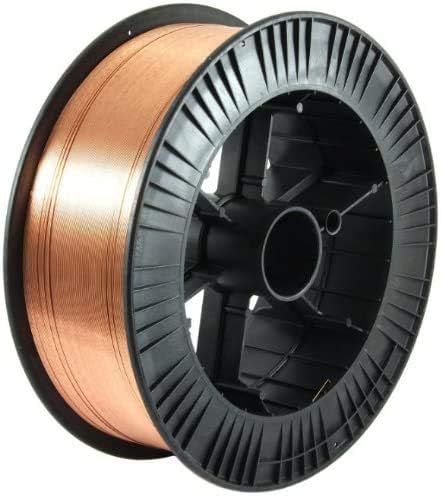
Featured Product Quick Take
- Name: Washington Alloy 33 Lb Mig Welding Wire ER70S-6 .030 For X-Ray Quality Welds
- SKU: E70S6E8 - 1 EACH
- Price: Unknown (Verify)
- What it fixes: MIG porosity on mild steel when mill scale, light rust, or shop contamination is getting into the puddle and your shielding gas coverage is marginal.
- Why it matters: Porosity is rework: grinding, re-welding, and lost time. ER70S-6 wire is commonly chosen because its higher manganese/silicon content provides stronger deoxidizing action, which can widen the process window on less-than-perfect steel (prep still matters).
- •Brand: Washington Alloy (product page)
- •Product: MIG welding wire (product title)
- •AWS classification: ER70S-6 (product title)
- •Wire diameter: .030 (product title)
- •Spool weight: 33 lb (product title)
- •Deoxidizers: high manganese and silicon content (product page)
- •Claim: X-ray quality porosity-free welds (product page)
- •Shielding gas recommendation: Unknown (Verify)
- •Polarity: Unknown (Verify)
Fitment note: wire diameter must match drive rolls, liner, and contact tip. If you are unsure, call 812-738-4344 with machine model + process + thickness.
What This Fix Solves
- •Pinholes/porosity that appears even when your settings look consistent
- •Porosity that gets worse on mill scale, light rust, or shop-worn steel
- •Beads that look acceptable until you grind or bend-test and find voids
- •Random porosity that comes and goes with drafts or nozzle condition
- •Time lost chasing voltage/WFS when the root cause is contamination + gas coverage
Root Cause Breakdown
- Mill scale and rust releasing gas into the puddle: Mill scale and rust are oxides and often hold moisture/contaminants. When the arc heats the surface, those contaminants gas out into the molten puddle and create porosity.
- Shielding gas coverage problems: Leaks, low flow, turbulence from excessive flow, or a nozzle packed with spatter can pull air into the arc zone. Porosity that comes and goes is often a gas delivery issue.
- Drafts and air movement: Fans, open doors, and cross-breezes strip shielding away from the puddle. This is especially noticeable on smaller nozzles or longer stickout.
- Wire feed instability: Drive roll slip, wrong groove type, liner drag, or incorrect tension can cause wire surging. Surging changes arc length and transfer behavior, which can aggravate porosity and spatter.
- Wire/base-metal mismatch for the condition of the steel: Wire choice is not a substitute for prep, but different wires can be more forgiving. ER70S-6 is commonly selected because its deoxidizer package can help on less-than-perfect surfaces (verify for code work and your application).
The Fix (Actionable Steps)
- Start with the pattern: if porosity is worse on mill scale/rusty steel than on clean steel, treat contamination as the primary suspect.
- Prep to bright metal where possible (at least 1 inch beyond the weld zone). Remove paint/oil/cutting fluid before you strike an arc.
- Leak-check your gas system (cylinder → regulator → hose → machine → gun) using an approved leak-detection solution.
- Clean the torch front end: remove spatter in the nozzle, confirm diffuser/nozzle seating, and replace worn contact tips.
- Stabilize wire feed: confirm drive roll groove type matches wire type, tension is not over-cranked, and the liner matches wire diameter.
- Then choose wire that fits the job: ER70S-6 is commonly chosen for mild steel and can be more forgiving on mill scale/light rust due to its deoxidizers (product page).
Note: We are not publishing fixed voltage/WFS numbers here because they are machine- and joint-dependent. The goal is to eliminate root causes first.
Key Specs / Fitment Notes (Bullets Only)
- •Product: Washington Alloy 33 Lb MIG Welding Wire ER70S-6 .030 (product title)
- •SKU: E70S6E8 - 1 EACH (product page)
- •Wire diameter: .030 (product title)
- •Spool weight: 33 lb (product title)
- •Deoxidizers: high manganese and silicon content (product page)
- •Shielding gas recommendation: Unknown (Verify)
- •Drive roll/liner/tip match required: Yes (general fitment rule)
Before You Order Checklist
- Machine: welder make/model + feeder model (if separate)
- Process: MIG (solid wire)
- Material: mild steel (clean vs mill scale vs light rust)
- Thickness: typical thickness range
- Consumables: wire diameter (.030) + matching contact tip + matching liner + matching drive rolls
- Torch/gun: gun model + consumable family
- Gas: gas type + draft conditions + leak check status
Not sure if .030 wire is right for your feeder and gun? Call 812-738-4344 with your machine model, process, and typical thickness and we’ll confirm fitment.
Recommended Accessories (Priority Order)
Comparison Block (Alternatives)
Common mild-steel wire with stronger deoxidizers (high Mn/Si per product page). Often chosen when steel is not perfectly clean (prep still matters).
Often used on cleaner steel. If you are welding through mill scale/rust, you may see more sensitivity to contamination (verify for your application).
Sometimes needed, but usually wasted if the root cause is contamination or shielding gas coverage. Fix the basics first.
Safety Note
Welding fumes and grinding dust are hazardous. Use appropriate ventilation and PPE, and follow your equipment manual. Shielding gas can displace oxygen in confined spaces—secure cylinders and leak-check connections. Never bypass safety devices.
Add to Cart — or Confirm Wire Diameter Fitment First
Add Washington Alloy ER70S-6 .030 (33 lb) to your cart if you can confirm your drive rolls, liner, and contact tip match .030 wire. Not sure? Call 812-738-4344 with machine model + process + thickness.