Gas Hose Leaking? Fix It Before You Waste Another Cylinder
If your shielding gas cylinder is emptying faster than it should, or you are chasing intermittent porosity that does not correlate to settings changes, the problem may not be your regulator, your machine, or your consumables. It may be the hose. Cracked rubber, loose crimps, and heat-damaged ends are some of the most common — and most overlooked — sources of gas leaks in a welding shop.
The cost adds up fast: wasted gas, wasted troubleshooting time, and weld defects that keep coming back because the root cause was never in the torch or the regulator. A hose repair kit lets you cut out the bad section and re-crimp a clean, leak-free connection in the shop — without replacing the entire hose.
Featured Product Quick Take
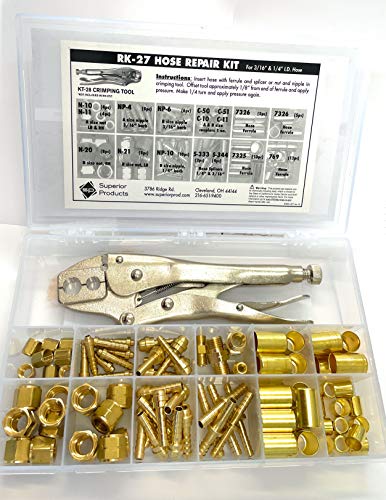
- Name: Weldmark Hose Repair Kit, "A & B" size 3/16" / 1/4" ID KT28 Tool (Western CK5/7)
- SKU: WM27 - 1 KIT
- Price: Unknown (Verify)
- What it fixes: shielding gas leaks caused by cracked, cut, or poorly crimped hose ends that waste gas, create inconsistent flow, and show up as intermittent porosity or arc instability.
- Why it matters: a leaking hose is one of the most overlooked causes of gas waste and weld defects. You can leak-check the regulator and machine all day, but if the hose itself is cracked or the fitting is loose, gas escapes before it ever reaches the torch. A repair kit lets you cut out the bad section and re-crimp a clean connection in the shop.
- •Brand: Weldmark (product page)
- •SKU: WM27 - 1 KIT (product page)
- •Hose sizes: "A & B" size 3/16" / 1/4" ID (product title)
- •Tool: KT28 crimping tool included (product title)
- •Cross-reference: Western CK5/7 (product title)
- •Pickup available: 1556 Old Highway 135 N, Corydon, IN (product page)
- •Kit contents (fittings count): Unknown (Verify)
Fitment note: confirm your hose ID (3/16" or 1/4") before using. This kit covers both "A" and "B" size fittings. If your hose is a different ID, this kit will not fit.
What This Fix Solves
- •Shielding gas cylinder empties faster than expected (slow leak through hose)
- •Porosity that comes and goes — especially after moving the torch or hose
- •Audible hiss or bubble at a hose connection when leak-checked
- •Cracked, hardened, or heat-damaged hose ends that no longer seal
- •Repeat troubleshooting through regulator and machine when the real leak is in the hose
Root Cause Breakdown
- Cracked or aged hose: Welding hoses are exposed to heat, UV, abrasion, and chemical contact. Over time, the rubber hardens, cracks, and develops micro-leaks that are hard to see but easy to detect with leak solution.
- Poorly crimped or loose fittings: Factory crimps can loosen over time, and field repairs with hose clamps often do not seal as well as a proper crimp. A loose fitting leaks under pressure and can create intermittent flow problems.
- Cut or damaged hose from shop traffic: Hoses get run over, stepped on, caught on sharp edges, and dragged across hot metal. Any of these can create a leak point that is not obvious until you lose a cylinder over a weekend.
- Wrong hose ID for the fitting: Using a fitting designed for 1/4" ID hose on a 3/16" hose (or vice versa) creates a poor seal. The connection may feel tight but leak under pressure.
- Ignoring the hose during troubleshooting: Most troubleshooting starts at the regulator and ends at the torch. The hose in between gets skipped because it looks fine from the outside. A leak-check with approved solution catches what visual inspection misses.
The Fix (Actionable Steps)
- Leak-check the entire gas path (cylinder → regulator → hose → machine → torch) using an approved leak-detection solution. Mark every bubble point.
- Inspect the hose visually: look for cracks, hardening, heat damage, abrasion wear-through, and loose/corroded fittings.
- If the hose is damaged at the end: cut out the bad section cleanly and use the WM27 repair kit to install a new fitting with the KT28 crimping tool.
- Confirm hose ID before crimping: this kit covers 3/16" and 1/4" ID. Using the wrong size fitting on the wrong hose will not seal.
- After repair, leak-check the new connection under pressure before welding. Confirm no bubbles at the crimp.
- If the hose is damaged in the middle or extensively cracked, replace the entire hose rather than splicing. A splice adds two potential leak points.
Note: This guide covers hose-end repair. If the hose is extensively damaged or hardened throughout, replace the full hose rather than splicing.
Key Specs / Fitment Notes (Bullets Only)
- •Product: Weldmark Hose Repair Kit, "A & B" size 3/16" / 1/4" ID KT28 Tool (product title)
- •SKU: WM27 - 1 KIT (product page)
- •Brand: Weldmark (product page)
- •Hose sizes covered: 3/16" and 1/4" ID (product title)
- •Tool included: KT28 crimping tool (product title)
- •Cross-reference: Western CK5/7 (product title)
- •Kit contents (fitting types and quantities): Unknown (Verify)
Before You Order Checklist
- Machine: welder make/model
- Process: MIG / TIG / Stick (gas use varies)
- Material: mild steel / stainless / aluminum
- Thickness: typical thickness range
- Consumables: N/A (hose repair) — but confirm nozzle/diffuser condition after fixing the hose
- Torch/gun: torch/gun model + hose connection style
- Gas: hose ID (3/16" or 1/4") + gas type + regulator outlet fitting
Fastest confirmation: call 812-738-4344 with your hose ID (3/16" or 1/4"), gas type, and what connection style you need.
Recommended Accessories (Priority Order)
Comparison Block (Alternatives)
Best when the damage is at the fitting or within a few inches of the end. Cut, crimp, leak-check, and you are back to work.
Best when the hose is cracked in multiple places, hardened throughout, or damaged in the middle. A full replacement eliminates all potential leak points.
Common but unreliable. Hose clamps do not seal as well as a proper crimp and can loosen over time. Use only as a temporary measure.
Safety Note
Compressed gas equipment is safety-critical. Depressurize the system before cutting or repairing hose. Leak-check all connections with an approved leak-detection solution after repair. Do not use oil or grease on oxygen service equipment. If you see damaged threads, persistent leaks, or hose that is hardened and cracked throughout, replace the full hose rather than attempting a field repair. Secure cylinders and follow CGA, OSHA, and manufacturer guidelines.
Add to Cart — or Confirm Hose ID First
Add the Weldmark WM27 hose repair kit to your cart if you can confirm your hose is 3/16" or 1/4" ID. Not sure? Call 812-738-4344 with your hose size and gas type.